Here in, thoughts of a film-maker. I will share my personal writings and thoughts in a rich thread on film-making, enjoy. Any donations to help me as an independent film-maker would be much appreciated and can be made at the end of the thread.
Best Regards.
Best Regards.
"A First Feature" After much study and play. It's on you! Whether your vision and small family who helped to bring it to life..............Succeed. It's on you , ok. If that now collective joining in on your filmmaking journey makes it through to finally share in that effort and finished film. Who does that make you?
An independent film is blessed when an independent group comes together as a family dedicated to the cause, art, and business you create together. Think big budget where you can. Your creative account full of talent currency. Is always tappable. Or, your problem solving skills. They'll always get you through as production rolls on. All roles: Writer, producer, director, actor, cinematograher, sound man. Will be demanding your attention as your team helps to support you and contribute. With that and a telephone. The project has found a solid foundation to get to post.
A filmmaking entry, by Andrew Biggs.
"A Mirror Art's First Feature"
An independent film is blessed when an independent group comes together as a family dedicated to the cause, art, and business you create together. Think big budget where you can. Your creative account full of talent currency. Is always tappable. Or, your problem solving skills. They'll always get you through as production rolls on. All roles: Writer, producer, director, actor, cinematograher, sound man. Will be demanding your attention as your team helps to support you and contribute. With that and a telephone. The project has found a solid foundation to get to post.
A filmmaking entry, by Andrew Biggs.
"A Mirror Art's First Feature"
Visual story telling.
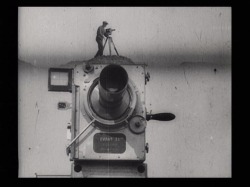
Great visual storytelling comes from many places like directing the audiences attention with light, but a basic foundation to strong visual stories is "sequencing". A series of shots when put together that form an action. A sequence is a series of wide shots, medium shots, close ups, two shots. To mention just a few. When you go to a movie and you see a certain sequence, along with other elements of a motion picture, and if there is real cinematic power it will come from a combination of editing, sound, music, all connecting in the story. When those things work and they really connect, you are transported.
When you direct the audiences attention with light you want to think about the way the light is set up. And what mood that the particular setup creates. Keep the 5 C's of cinematography close by; camera angles, continuity, close ups,
composition, cutting. Think about mood, time, setting, place. Your writing the story with the camera and lighting.
By Andrew.B.
When you direct the audiences attention with light you want to think about the way the light is set up. And what mood that the particular setup creates. Keep the 5 C's of cinematography close by; camera angles, continuity, close ups,
composition, cutting. Think about mood, time, setting, place. Your writing the story with the camera and lighting.
By Andrew.B.
In Conversation with Stanley, Part 1.
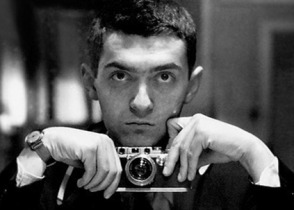
Listen you can get people to do the leg work and include them in the collabrative process of your film, but if your not concerned and almost obsessed with every aspect to complete and perfect your vision, who is?
Work Hard on the image, what is presented from corner to corner. What does the composition need to include and exclude. To get that quality shot that sows the story together.
Pre plan these images and shots. Get them concreate before you shoot and then your better prepared for evolving and on the spot ideas on set.
You see composition within the frame is always very important. Photography really helps to develop this and ingrave it without all the other elements of a motion picture frame. It is still and you develop your control from a solid foundation with an eye that knows what to look for.
From there when you evolve, take conventional shot ideas and reinvent them or exaggerate them, inbed them with a few variables of the 6, angle, image size, motion, depth of field, focus, speed and zoom. And push those elements with the shot idea to where few take it.
By Andrew Biggs, Kubrick S.
Work Hard on the image, what is presented from corner to corner. What does the composition need to include and exclude. To get that quality shot that sows the story together.
Pre plan these images and shots. Get them concreate before you shoot and then your better prepared for evolving and on the spot ideas on set.
You see composition within the frame is always very important. Photography really helps to develop this and ingrave it without all the other elements of a motion picture frame. It is still and you develop your control from a solid foundation with an eye that knows what to look for.
From there when you evolve, take conventional shot ideas and reinvent them or exaggerate them, inbed them with a few variables of the 6, angle, image size, motion, depth of field, focus, speed and zoom. And push those elements with the shot idea to where few take it.
By Andrew Biggs, Kubrick S.
Live it, breath it, utilize the subconscious.
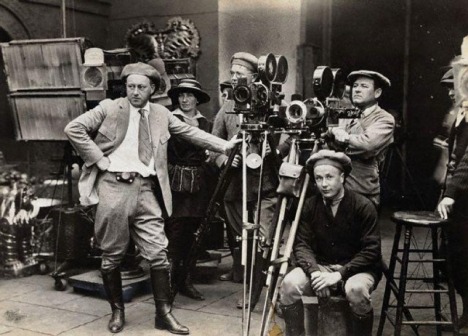
There are so many things that are going to call for your attention when making a film and going through pre production, production and post. And if you lack in one it can affect the other as your making the film three times. If you really love movies, I mean "REALLY" love movies as Quentin Tarantino said. You can't help but make a good film, but to get there your going to have to put in the hours to learn. Film school is a good option. Though if you can't go. You'll have to be the school yourself. Have an exceptional hunger to learn. Then all that knowledge is going to need time to swish around in your head. So experiment with little projects that use the three stages of production, get reactions. Learn the rules, keep the rules, break the rules. Then after that time in the cocoon when all comes to a boil. Go for a feature. If you have funds and face film school or feature film that's a hard choice, but if you really feel your ready and put in those endless hours, go for the feature.
By Andrew Biggs.
By Andrew Biggs.
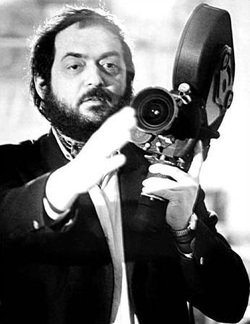
In Conversation with Stanley, Part 2
Don't tell every story the same way, or how conventions say
you should tell a story. Once you understand these conventions, practices and techniques of story telling in the film world and you have some good pratical experience. Run free, reinvent and tell your story your way.
Get the image, the great eye captivating visual that has the power to stay with your audience once the film is over. Understand how you are telling a story with visual images, You'll know where to put the camera, you'll develop your tastes, create a time and place.
Drown your self in film studies any
way you can, be obssesive, thirsting for water in the desert, its what you love
to do. So leave no sand dune untraversed. Pans, slow or....? Zooms? Motivation?
Moblie camera? Mobile in front of camera? Combinations. What can you reveal to
the audience with them. Understand the emotional aspect of image size and all
the variables you have in your tool box!
Keep them guessing as much as you can. Why this? Who's that? Where are we? Etc. See it out in front of you and capture it.
By Andrew Biggs, Kubrik S
Don't tell every story the same way, or how conventions say
you should tell a story. Once you understand these conventions, practices and techniques of story telling in the film world and you have some good pratical experience. Run free, reinvent and tell your story your way.
Get the image, the great eye captivating visual that has the power to stay with your audience once the film is over. Understand how you are telling a story with visual images, You'll know where to put the camera, you'll develop your tastes, create a time and place.
Drown your self in film studies any
way you can, be obssesive, thirsting for water in the desert, its what you love
to do. So leave no sand dune untraversed. Pans, slow or....? Zooms? Motivation?
Moblie camera? Mobile in front of camera? Combinations. What can you reveal to
the audience with them. Understand the emotional aspect of image size and all
the variables you have in your tool box!
Keep them guessing as much as you can. Why this? Who's that? Where are we? Etc. See it out in front of you and capture it.
By Andrew Biggs, Kubrik S
Ok, lets move on to something different that caught my attention. We can always revisit with Stanley and share in his company.
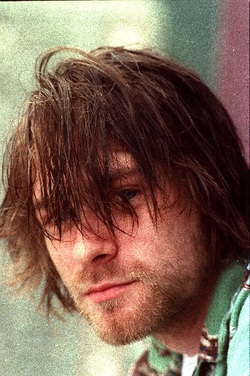
Who should play Kurt Cobain?, part 1.
Here's my thoughts on the matter. Even though it probably makes no difference. Kurt should be bringing his story to the screen himself! That's why I think an unkown should do the acting here. Not "oh so and so is playing Kurt, I love so and so. I gotta see that movie. Don't worry about filling the seats that way! Kurt is more than able to do that himself!!! The focus here is Kurt and his story.
And I think a very well known actor who even has a slight chance of overshadowing the soul and humanity I hope comes out in this picture. Could be a sheep in wolve's clothing, how Kurt's harmonious existence was
protested by such.
Hold open auditions, give a new chance for someone to
breakout, we know Kurt would respect that. I know it's not a simple issue, but
lets think about Kurt, who he was, what he would want? And what he stood for and
still does. This is his film, his life, his art. I hope it doesn't get lost in
the numbers. Kurt loved music, but not so much the pop icon, lets get a pop teen
star to play him. Well I'm not making the movie, I'm just thinking of Kurt who
many many years ago inspired me to become a rock musician and find. And find my way.
Here's my thoughts on the matter. Even though it probably makes no difference. Kurt should be bringing his story to the screen himself! That's why I think an unkown should do the acting here. Not "oh so and so is playing Kurt, I love so and so. I gotta see that movie. Don't worry about filling the seats that way! Kurt is more than able to do that himself!!! The focus here is Kurt and his story.
And I think a very well known actor who even has a slight chance of overshadowing the soul and humanity I hope comes out in this picture. Could be a sheep in wolve's clothing, how Kurt's harmonious existence was
protested by such.
Hold open auditions, give a new chance for someone to
breakout, we know Kurt would respect that. I know it's not a simple issue, but
lets think about Kurt, who he was, what he would want? And what he stood for and
still does. This is his film, his life, his art. I hope it doesn't get lost in
the numbers. Kurt loved music, but not so much the pop icon, lets get a pop teen
star to play him. Well I'm not making the movie, I'm just thinking of Kurt who
many many years ago inspired me to become a rock musician and find. And find my way.
You will be missed Tony Scott
Action and Adrenaline were his forte, he owned this genre of the film-making world. No reboots and remakes of the common trend in his filmography. I feel the Top Gun sequel would of been a genuine narrative continuation of this kind. Tom Cruise was rumored to join Tony on this project. Which would of given fresh life to the form of, sequel.
Tony Scott preferred to get in touch with the worlds he was creating for the screen. And good solid research was one of the avenues that lead him there. Along with some of his other trusty tools of originality, inspiration, branch off interpretation. He faced the fear of new challenge and creation with hope to overcome. This is a touch of what drove him in his works. His films are a testament to his way of film-making and bringing entertainment to the world. Here are a couple videos to take a moment and remember the sad loss of a great film-maker. Tony Scott, 1944-2012.
Tony Scott preferred to get in touch with the worlds he was creating for the screen. And good solid research was one of the avenues that lead him there. Along with some of his other trusty tools of originality, inspiration, branch off interpretation. He faced the fear of new challenge and creation with hope to overcome. This is a touch of what drove him in his works. His films are a testament to his way of film-making and bringing entertainment to the world. Here are a couple videos to take a moment and remember the sad loss of a great film-maker. Tony Scott, 1944-2012.
